Quiet Custodians: How America's Neighborhood Libraries Guard the Stories History Forgot
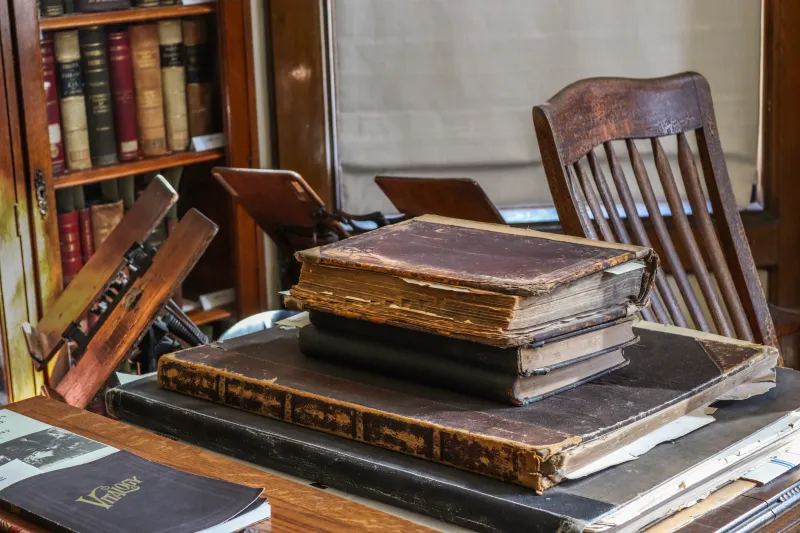
In a climate-controlled back room of the Grundy County Public Library in Trenton, Missouri, a cardboard box sits on a metal shelf. Inside, wrapped in acid-free tissue paper, are the handwritten letters of a local schoolteacher who documented the town's transition through the Dust Bowl era — letters never published, never digitized, and known only to the librarian who catalogued them a decade ago. They are, by almost every measure, invisible to the wider world. Yet they represent something invaluable: an unfiltered, firsthand account of American life during one of the nation's most turbulent chapters.
Scenes like this play out in libraries from Appalachia to the Pacific Northwest. While the Library of Congress and major university archives command attention and resources, it is the modest neighborhood library — often underfunded and understaffed — that quietly absorbs and preserves the lived experiences of ordinary Americans. These institutions function as unofficial archives of local history, holding materials that would otherwise vanish entirely from the historical record.
The Accidental Archivist
Many librarians describe their role in preservation as something they stumbled into rather than sought out. Margaret Hollis, who has served as head librarian at a small public library in eastern Tennessee for nearly two decades, recalls the afternoon a local family donated a collection of self-published pamphlets their grandfather had produced in the 1940s. The pamphlets documented the oral histories of Cherokee families in the region — stories the grandfather had gathered over years of conversations with community elders.
"Nobody had asked for these," Hollis noted during a recent interview. "They came to us because the family didn't know where else to bring them. We weren't equipped to handle rare materials, but we understood that if we turned them away, they would likely end up in a landfill."
This kind of informal acquisition is common across American library systems. Unlike formal archives, which operate with strict collection policies and acquisition budgets, neighborhood libraries often accept donations based on little more than the judgment of a single librarian. That flexibility, while administratively imperfect, is precisely what allows these institutions to capture materials that fall through the cracks of official historical infrastructure.
Self-Published and Overlooked
One of the most significant — and least discussed — categories of material held in community libraries is self-published literature. Long before digital self-publishing platforms democratized the written word, Americans were producing chapbooks, zines, community newsletters, and locally printed novels that circulated within specific towns, churches, or ethnic communities. These works rarely made it into mainstream publishing catalogs, and most have never been reviewed, cited, or formally studied.
Yet they offer an extraordinary window into regional culture. A self-published cookbook from a Vietnamese immigrant community in New Orleans, for instance, preserves not only recipes but language, family structure, and the particular experience of resettlement in the American South. A collection of poems printed by a coal miner's union in West Virginia tells a story of labor, solidarity, and hardship that no commercially published anthology has fully captured.
Librarians who have made it their mission to seek out and retain these materials describe a consistent pattern: the works are undervalued at the moment of donation and priceless in retrospect. "People bring us things apologetically," said one librarian from a rural Colorado branch. "They say, 'I don't know if this is worth anything.' And sometimes it isn't. But sometimes it's the only surviving copy of something that no one else thought to keep."
The Digitization Imperative
Awareness of these hidden collections has grown alongside a grassroots movement to digitize and share them. Organizations such as the Digital Public Library of America (DPLA) have worked to aggregate digitized materials from local institutions, making it possible for a researcher in Boston to access a photograph held in a library in rural Arkansas. However, the digitization process itself remains a significant obstacle for underfunded libraries.
Scanning equipment, metadata standards, copyright considerations, and staff training all require resources that many small libraries simply do not have. Some have turned to community volunteers, partnering with local historical societies, university programs, or even high school students seeking service hours. Others have applied for state and federal grants, with varying degrees of success.
The results, when digitization does occur, can be remarkable. The Newberry Library in Chicago, which has long collaborated with smaller institutions in the Midwest, has helped surface materials from community collections that have since been cited in academic research, incorporated into documentary films, and used in school curricula. What was once accessible only to those who happened to walk through a particular library's door is now available to anyone with an internet connection.
Family Records and the Genealogical Goldmine
Beyond literary and cultural materials, community libraries frequently hold family records of extraordinary genealogical value. Church registers, census supplements, naturalization papers, and privately compiled family histories often find their way into library collections through estate donations. For communities with significant immigrant populations — whether Irish, Italian, Polish, Hmong, or Mexican — these records can provide links to ancestry that official government archives do not capture.
Librarians working in regions with historically marginalized communities have noted that their collections sometimes preserve the only surviving documentation of families whose records were systematically excluded from or destroyed within official archives. In parts of the Deep South, for example, libraries have retained records compiled by African American civic organizations during the Jim Crow era — documents that offer a counter-narrative to official accounts of the period.
"What we hold here isn't supplementary," said one librarian from a historically Black neighborhood library in Georgia. "In many cases, it's the primary record. It's the only record."
What Readers Can Do
For those who wish to engage with this quiet preservation movement, the opportunities are both accessible and meaningful. Visiting a local library and asking about its special collections or local history room is a natural first step. Many libraries maintain finding aids — essentially inventories of their archival holdings — that are not widely publicized but are available upon request.
Donating family materials, particularly those documenting regional life, ethnic heritage, or community history, is another avenue through which individuals can contribute to the preservation effort. Librarians universally emphasize that the historical significance of such materials is often invisible to the families who hold them.
Financial support, whether through Friends of the Library organizations or direct donations, helps sustain the institutional capacity that makes preservation possible. Advocacy for library funding at the local and state level is equally important, as budget cuts frequently target the very positions and programs that enable archival work.
The Archive as Community Mirror
At its core, the neighborhood library's role as an unofficial archive reflects something fundamental about the relationship between community and memory. These institutions do not simply store books — they absorb the documentary residue of human lives, preserving the texture of experience that formal history tends to smooth away.
The letters in that cardboard box in Missouri, the self-published pamphlets in Tennessee, the family records in Georgia — each represents a fragment of American life that would otherwise be irretrievably lost. That they survive at all is a testament to the judgment, dedication, and quiet resourcefulness of the librarians who recognized their worth.
In an era defined by the rapid circulation of information, the slow, careful work of preservation has never been more important. America's neighborhood libraries are doing that work, one forgotten document at a time.