Against the Clock: Rural America's Urgent Mission to Capture Fading Voices on Digital Record
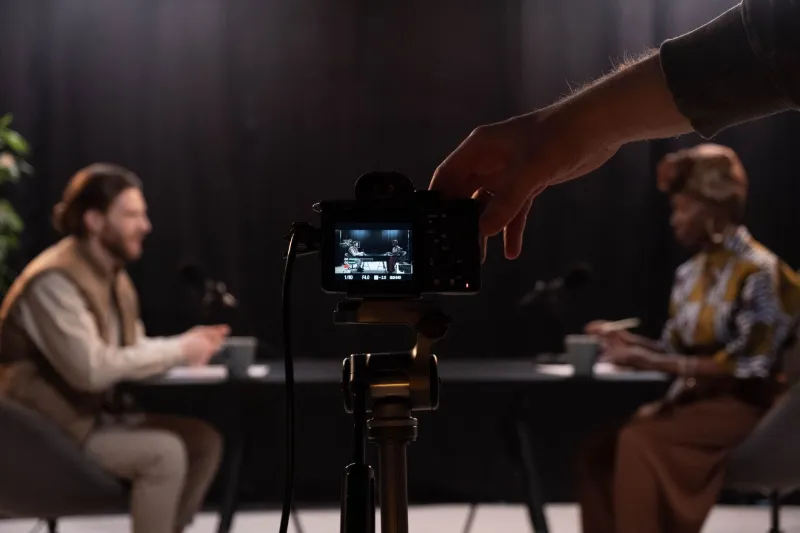
In a converted grain storage room on the outskirts of Harlan County, Kentucky, a retired schoolteacher named Doris Combs sits across from a man who once worked the coal seams his grandfather first opened in 1931. A small digital recorder rests on the table between them. Outside, the afternoon is quiet. Inside, nearly a century of lived experience is being carefully drawn into the light.
Scenes like this one are unfolding with growing urgency across rural America. From the bayou parishes of Louisiana to the wheat-farming communities of western Kansas, local volunteers and small nonprofit organizations are racing to document oral histories before the generation that holds them passes on. These efforts represent something more than nostalgia. They are, in the truest sense, acts of cultural rescue.
What Is Being Lost — and Why It Matters
The spoken word has always been the oldest form of human record-keeping. Long before manuscripts or printing presses, communities preserved their knowledge, their grief, their humor, and their identity through storytelling. In rural American communities especially, where written documentation has historically been sparse, oral tradition carries an outsized portion of the historical record.
Yet that record is extraordinarily fragile. The average age of the individuals most likely to hold irreplaceable firsthand knowledge — those who remember pre-electrification farm life, the Great Migration, the Dust Bowl, the closing of the local mill — is now well into the eighties and nineties. Every month, stories that exist nowhere in print disappear permanently.
Major archival institutions, including the Library of Congress and large research universities, have long maintained oral history programs. But their scope is necessarily selective, prioritizing narratives with broad national resonance or connections to documented historical events. The texture of daily life in a small Nebraska town in 1948, or the particular cadence of storytelling among Gullah Geechee elders along the South Carolina coast, rarely rises to the threshold of institutional interest.
That gap is precisely where community-driven digitization efforts have found their purpose.
Ingenuity in the Face of Limitation
The obstacles facing small-town archivists are considerable. Funding is perennially scarce. Technical expertise is often in short supply. Volunteers age alongside the subjects they are trying to record. And the sheer logistical challenge of reaching isolated rural residents — many of whom are skeptical of outsiders with recording equipment — demands patience and deep community trust.
In Calhoun County, West Virginia, a volunteer collective called the Voices of the Little Kanawha Project has navigated these challenges with notable creativity. Working with a budget that rarely exceeds fifteen thousand dollars annually, the group has trained local high school students in basic audio recording and interview technique, then paired them with elderly community members for structured conversation sessions. The intergenerational model has proven remarkably effective: elders who might be guarded with an unfamiliar adult researcher often speak openly with a teenager from their own community.
The recordings are subsequently processed through open-source audio software, transcribed by a rotating team of remote volunteers recruited through a national digital humanities network, and uploaded to a publicly accessible repository hosted on servers maintained by a regional community college.
Similar models have taken root elsewhere. In the Rio Grande Valley of South Texas, a bilingual archive project run through a local community center has collected more than four hundred hours of testimony from longtime residents, many of whom recount experiences of agricultural labor, border crossing, and cultural negotiation that have never appeared in any academic study. The project conducts all interviews in Spanish, with English transcriptions added afterward — a deliberate choice that preserves the linguistic authenticity of the original testimony.
The Technical Frontier
Digitization itself, once a formidable technical barrier, has become considerably more accessible in recent years. Consumer-grade digital recorders now capture audio at archival quality. Cloud storage costs have dropped dramatically. Transcription software, while imperfect, has improved to the point where it can produce usable rough drafts that human volunteers then refine.
Nevertheless, meaningful challenges remain. File format standardization is a persistent concern: a recording stored in a proprietary format today may become inaccessible within a decade if the supporting software is discontinued. Responsible archivists must think not only about capturing stories but about ensuring those captures remain retrievable across generations of changing technology.
Metadata — the descriptive information attached to each recording, including the speaker's name, date, location, and subject matter — is equally critical. Without robust metadata, even a well-preserved audio file becomes difficult to search, contextualize, or connect to related materials. Many small projects, pressed for volunteer hours, have struggled to maintain consistent metadata standards, creating archives that are rich in content but challenging to navigate.
Some communities have addressed this by partnering with library science programs at nearby colleges and universities, whose graduate students provide both technical guidance and labor in exchange for hands-on archival experience. These partnerships, when they function well, represent a genuinely symbiotic exchange: communities gain expertise, and students gain access to living collections they would never encounter in a classroom.
Uncovering the Overlooked
Perhaps the most striking outcome of these grassroots efforts is the consistent discovery of narratives that established history has simply never recorded. In eastern Mississippi, a church-based oral history initiative uncovered detailed accounts of a 1930s labor dispute among Black domestic workers — an episode of organized resistance that appears in no county history and no newspaper archive, yet is remembered with vivid specificity by three women now in their late nineties.
In rural Idaho, a project focused on the descendants of Basque sheepherders has documented a body of traditional song, proverb, and occupational knowledge that linguists and ethnomusicologists had assumed was effectively extinct in North America. The recordings have since attracted the attention of researchers at two universities, generating collaborative projects that would never have been possible without the community's prior initiative.
These discoveries illuminate a fundamental truth about the archival record: what has been preserved is not a neutral reflection of what happened, but a product of decisions — often unconscious — about whose experiences were deemed worth documenting. Community-driven oral history projects do not merely supplement the official record. In many cases, they correct it.
The Longer Purpose
For those doing this work, the motivation extends beyond historical documentation. The act of recording a community elder's memories, of treating their experiences as worthy of careful preservation, carries its own social meaning. It communicates to living community members that their heritage has value — that the stories passed across kitchen tables and front porches are as significant as anything contained in a formal archive.
At the Stihl Library, we understand that preservation is never merely a technical exercise. It is an act of recognition. The communities digitizing their oral histories are not simply saving audio files. They are insisting, against the indifference of time and institutional neglect, that these voices belong in the permanent record of American life.
The grain storage room in Harlan County, the community center in the Rio Grande Valley, the church fellowship hall in eastern Mississippi — these are, in their own way, libraries. And the stories being gathered within them are among the most honest accounts of this country that anyone has ever thought to write down.