Before the Language Fades: Adult Children of Immigrants Are Racing to Record the Lives Their Parents Left Behind
For most of her childhood, Maya Okonkwo thought her mother's stories about Lagos were simply bedtime embellishments — vivid, warm, and slightly mythologized. It was only when her mother suffered a minor stroke at seventy-one that Maya, a thirty-four-year-old systems analyst living in Columbus, Ohio, understood with sudden clarity that those stories were irreplaceable, and that she had taken their continued telling entirely for granted.
"I sat in that hospital room and realized I didn't even know the name of the neighborhood my mother grew up in," Maya said. "I knew her American life. I knew almost nothing about who she was before she became my mother."
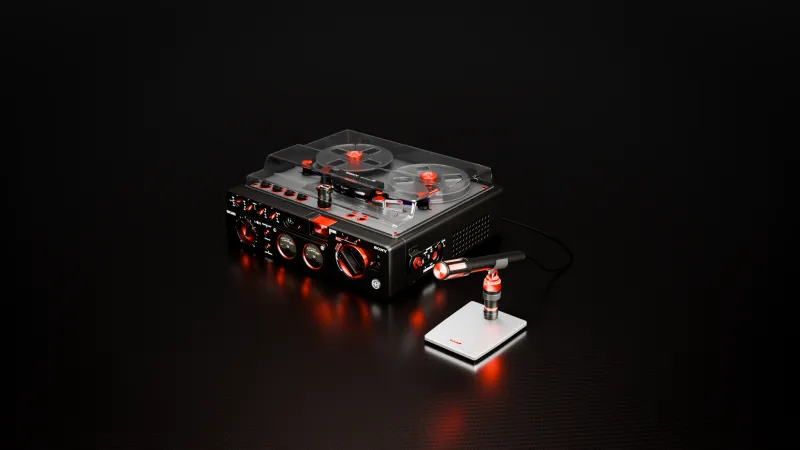
Within weeks of her mother's recovery, Maya had purchased a quality microphone, subscribed to a transcription service, and conducted the first of what would become more than forty recorded interviews. She has since translated portions of those sessions — her mother slips naturally between English and Igbo — with the help of a cousin overseas and a linguistics professor at Ohio State.
Maya's undertaking is not unique. Across the country, adult children of immigrants are engaging in a form of grassroots preservation work that libraries and cultural historians are only beginning to fully appreciate. This generation — largely American-born, English-dominant, and increasingly aware of their parents' advancing age — has recognized a gap that no institution has adequately filled. The stories their parents carry are not written in any archive. They exist only in living memory, and that memory is finite.
A Generation Awakened to Urgency
Demographers note that the United States is home to more than forty-four million immigrants, many of whom arrived during the major migration waves of the 1970s, 1980s, and 1990s. Their children — the so-called second generation — now range widely in age, with a substantial cohort entering their thirties and forties. As their parents grow older, the arithmetic of loss becomes impossible to ignore.
This awareness has given rise to what some cultural preservationists are calling a "kitchen table archive" movement: informal, deeply personal documentation projects that are quietly accumulating thousands of hours of recorded testimony, scanned photographs, handwritten recipes, and hand-drawn maps of villages that may no longer exist in the form their parents remember.
The tools available to this generation have made the work far more accessible than it would have been even a decade ago. Applications such as Otter.ai and Rev offer affordable transcription. Cloud storage services allow families to build organized digital archives without specialized training. Organizations like StoryCorps have long provided frameworks for recorded interviews, and their resources are freely available online.
Yet what distinguishes this movement is not its technology but its motivation. These are not professional archivists operating within institutional mandates. They are sons and daughters, nieces and nephews, acting out of love and a dawning understanding that cultural memory does not transfer automatically across generations.
The Particular Challenge of the Untranslated
One of the most complex dimensions of this preservation work involves language itself. Many immigrant parents narrate their histories most fluently — and most honestly — in their native tongues. The emotional texture of a memory, the precise weight of a particular word, often resists translation. Yet many second-generation Americans possess only partial fluency in their heritage languages, enough to follow a conversation but not always enough to capture its nuances.
Javier Restrepo, a forty-year-old educator in San Antonio, Texas, found himself in exactly this position when he began recording his father, a Colombian-born carpenter who had emigrated in 1987. "My Spanish is conversational, not literary," Javier explained. "My father would use expressions I had never heard, references to places and people I didn't recognize. I started keeping a running glossary just to keep up."
Javier eventually partnered with a local Spanish-language community radio station, whose staff helped him identify volunteers willing to assist with translation and cultural context. That collaboration, he notes, transformed a solitary family project into something with broader community resonance. The station has since begun encouraging other listeners to undertake similar documentation efforts.
This kind of community extension is precisely what cultural librarians hope to see. When private family archives are shared — even selectively, even partially — they contribute to a richer, more textured understanding of American multicultural history. The stories of individual families, placed in dialogue with one another, begin to illuminate patterns of migration, resilience, and adaptation that no single narrative could convey alone.
What Gets Lost Without Deliberate Preservation
Historians and archivists are candid about what is at stake when oral histories go unrecorded. Pre-migration memories — accounts of daily life, social customs, political climates, and geographic landscapes in countries of origin — are among the most vulnerable categories of historical knowledge. Official records from those countries may be incomplete, inaccessible, or destroyed. The lived experience of ordinary people rarely appears in formal documentation at all.
For communities whose histories have been marked by displacement, conflict, or systemic exclusion, this vulnerability is especially acute. Families from Southeast Asia who survived the upheaval of the 1970s, communities from Central America who fled violence in the 1980s, and individuals from West Africa who navigated complex immigration pathways all carry histories that exist in no government database, no library catalog, no digitized collection.
"What these families are doing is filling an archival void that institutions have largely failed to address," said one oral history specialist affiliated with a Midwest university library who has begun working informally with several such community projects. "The professional archival world is paying attention, but it is also honest enough to admit that it cannot replicate what these families are doing from the inside."
The Emotional Weight of the Work
For those engaged in this documentation, the process is rarely straightforward. Interviewing an aging parent about difficult memories — poverty, discrimination, grief, the particular loneliness of early immigrant life — can surface emotions that family relationships have long kept submerged. Several individuals interviewed for this article described sessions that began as structured oral history projects and became something far more intimate.
"My mother told me things she had never told anyone," said Priya Mehta, a thirty-eight-year-old physician in the Chicago area whose parents emigrated from Gujarat in the early 1980s. "She talked about feeling invisible for years. About working jobs that humiliated her because her credentials weren't recognized here. I had no idea. She always presented such a composed face to us."
Priya has since organized her recordings into a structured digital archive, complete with timestamps, thematic tags, and scanned photographs. She has shared portions of the collection with a South Asian cultural organization in the Chicago area and is exploring whether a local library might host a curated selection as a community resource.
Preservation as an Act of Identity
Underlying all of this work is a question that second-generation Americans have long navigated: who are we, exactly, and where do we come from? For many, the documentation project is not merely an act of filial devotion. It is an effort to construct a more complete understanding of their own identity — one that honors the lives their parents lived before America entered the picture.
The stories being recorded in these living rooms and over these video calls are as much a part of American literary and cultural heritage as any novel or poem. They are the raw material of a national narrative that is still being written — one that belongs not only to the families who lived it, but to every community that shares this country with them.
At Stihl Library, we believe that preservation is not solely the province of institutions. It begins wherever someone decides that a story is worth saving — and has the courage to ask, before it is too late, for the chance to hear it.