Brought Back to the Shelf: The Community-Driven Campaign to Rescue Forgotten American Novels

Somewhere in a used bookstore in Asheville, North Carolina, a paperback with a cracked spine and a cover faded to near illegibility sits wedged between more familiar titles. Its author has been dead for decades. Its original publisher folded long ago. Yet a small reading group in that same city has spent the better part of two years working to bring it back into print — not because it appeared on any bestseller list, but because its members believe it deserves to be read again.
This scene is not unusual. From Portland, Oregon, to Savannah, Georgia, a quiet but determined movement is taking shape around out-of-print American literature. Book clubs, local libraries, independent presses, and individual readers are collaborating in ways that blur the line between preservation and publication, between archiving and advocacy. Their shared conviction is straightforward: a story that cannot be found cannot be passed on.
The Books That Slipped Through the Cracks
American literary history is populated not only by the celebrated and the canonical, but by thousands of novels that enjoyed modest success, earned admiring reviews, and then disappeared when their publishers went out of business, merged with larger conglomerates, or simply allowed titles to go out of print as sales declined. The criteria for what gets preserved in the commercial publishing ecosystem have rarely aligned with what communities value most.
Works by women writers of the mid-twentieth century, regional novelists whose stories were deeply rooted in specific American landscapes, and authors from communities that were historically underrepresented in mainstream publishing are among the most frequent casualties. Their books may survive in library special collections or in the personal shelves of devoted readers, but they are effectively inaccessible to anyone who does not already know to look for them.
For the readers who do find these books — often through secondhand shops, estate sales, or a chance recommendation — the discovery can feel like uncovering something irreplaceable. That sense of urgency is precisely what drives many of them toward action.
Reading Groups as Agents of Revival
The book club has long served as one of America's most democratic literary institutions — a space where readers without academic credentials or publishing industry connections gather to decide, collectively, what is worth their attention. Increasingly, some of these groups are extending that democratic impulse beyond discussion and into advocacy.
In Minneapolis, one long-running reading group dedicated to Midwestern literature has compiled what its members call a "shadow canon" — a list of novels set in the Great Plains and Upper Midwest that they believe deserve wider recognition. Several titles on that list have since attracted the interest of small regional presses, with members of the group serving as informal advisors, writing introductory essays, and helping to connect publishers with the estates of deceased authors.
This kind of community involvement in the editorial process represents a meaningful shift. Readers are no longer simply the end recipients of publishing decisions made elsewhere; they are becoming participants in the process of deciding which literary voices are preserved and amplified.
The Legal and Technical Labyrinth
For all the enthusiasm that drives these revival efforts, the practical obstacles are formidable. Copyright law in the United States creates a complex landscape for anyone hoping to republish a work without clear ownership or an easily traceable rights holder. Works published before 1928 are generally in the public domain, but the vast majority of out-of-print twentieth-century novels remain under copyright — often held by estates, publishing conglomerates, or in some cases, by no one who can be readily identified.
The term "orphan works" describes books whose copyright holders cannot be located despite reasonable efforts to find them. This legal ambiguity has stalled numerous well-intentioned republication projects, as small presses and community organizations lack the resources to conduct exhaustive rights searches or to absorb the legal risk of proceeding without clear authorization.
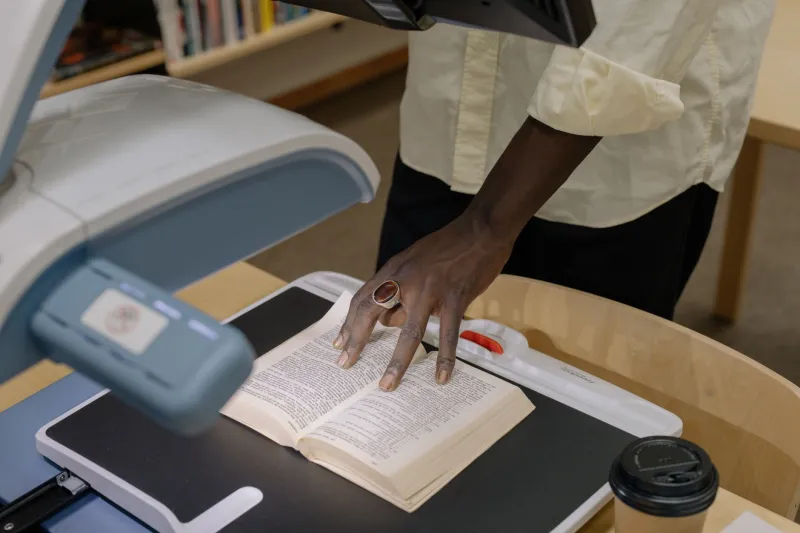
Beyond copyright, the technical process of republication presents its own challenges. Older books may exist only in deteriorating physical copies, requiring careful digitization before they can be reformatted for modern printing or electronic distribution. Libraries with preservation mandates have become important partners in this work, offering both the technical infrastructure and the institutional credibility that community-led projects sometimes lack on their own.
Small Presses Filling the Gap
A number of independent American publishers have built their identities around the explicit mission of recovering overlooked literary work. These presses operate with modest budgets and limited distribution networks, but their editorial commitments are precise and purposeful. Some focus on a particular era; others concentrate on the literature of specific regions or communities.
What distinguishes the most successful of these efforts is the depth of engagement they maintain with the readers who care most about the books they publish. Rather than treating republication as a purely commercial decision, they approach it as a collaborative act of cultural stewardship — one that involves consultation with scholars, community members, and descendants of the original authors whenever possible.
This approach aligns closely with the broader philosophy of community archiving: the idea that the preservation of cultural materials is not solely the province of institutions, but a shared responsibility that benefits from the knowledge, memory, and investment of the communities to which those materials belong.
What Communities Decide to Save
Perhaps the most significant dimension of this movement is the question it implicitly poses about cultural authority. When a book club in Tucson campaigns for the republication of a forgotten novel about the Arizona borderlands, or when a library system in rural Appalachia works to digitize and distribute a regional author's complete works, these communities are making a statement about what their history looks like and which voices belong in it.
These decisions are not neutral, and the participants in these revival efforts are generally aware of that. The choices reflect values — about representation, about regional identity, about which kinds of American experience have been systematically undervalued by mainstream publishing and literary criticism. In that sense, the work of rescuing out-of-print books is inseparable from the broader project of preserving community memory.
A story saved is not merely a text recovered. It is an assertion that the experience it captures — the landscape it describes, the people it brings to life, the moment in American history it illuminates — deserves to be remembered. That assertion, made collectively by readers who refuse to let a book disappear, is itself a form of community building.
The Archive as a Living Thing
At Stihl Library, we understand the archive not as a static repository but as a living, evolving record of what communities choose to hold onto. The movement to revive out-of-print American novels embodies that understanding in its most active form. These readers, publishers, and librarians are not simply cataloging the past; they are making an argument about the future — about which stories will be available to the next generation of readers and which will be allowed to fade.
The work is slow, often legally complicated, and rarely financially rewarding. But for those engaged in it, the reward is of a different kind: the knowledge that a voice which might have been permanently silenced will instead find new readers, new conversations, and a new place on the shelf.