Written in Flour and Memory: The Americans Archiving Family Recipes Before the Last Cook Is Gone
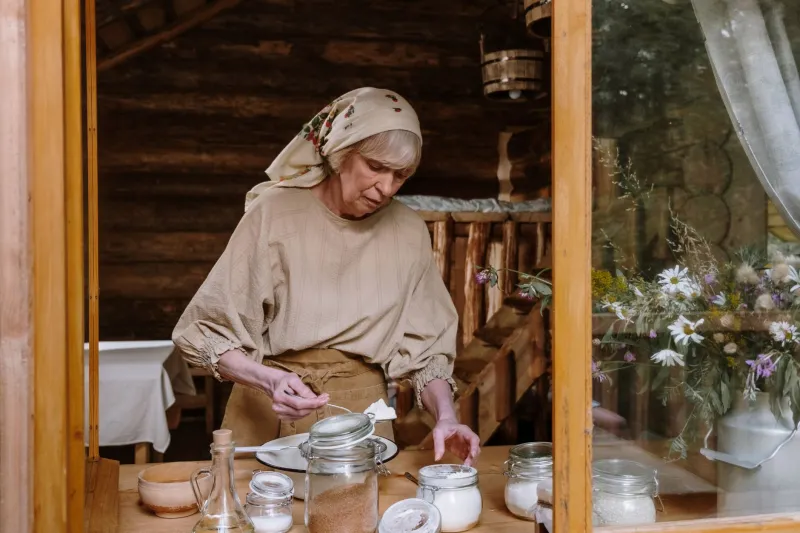
In a small town outside Savannah, Georgia, a retired schoolteacher named Dolores Whitfield spent the better part of three years photographing every recipe card her late mother had kept in a battered tin box beneath the kitchen counter. There were 214 of them — some typed on index cards, others scrawled on torn grocery bags, a few written in the careful cursive of a woman who had learned to cook before she learned to read English fluently. Whitfield did not consider herself a historian. She considered herself a daughter trying not to forget.
"Every one of those cards is a conversation," Whitfield said. "My mother never measured anything twice the same way. The card is just a starting point. The real recipe lived in her hands."
That tension — between what a document can capture and what it cannot — sits at the heart of a growing preservation movement that has taken root in American kitchens, community centers, and digital archives alike. Across the country, individuals and organizations are racing to collect, digitize, and contextualize family recipes before the cooks who carry them in memory are no longer here to explain what the cards left out.
More Than Ingredients: Why Recipes Are Cultural Documents
To the untrained eye, a handwritten recipe card is a practical object — a list of ingredients, a sequence of steps, perhaps a note about oven temperature scrawled in the margin. To a food historian or a cultural archivist, however, such a document is something far richer. It is evidence of migration patterns, economic circumstances, agricultural traditions, and the quiet negotiations between cultures that occur whenever families move, intermingle, or adapt.
Dr. Priya Anand, a food studies scholar at a university in the Midwest, has spent more than a decade arguing that culinary documents deserve the same institutional respect afforded to letters, diaries, and civic records. "A recipe written by an immigrant woman in 1940s Chicago tells you what ingredients were available to her, what she could afford, what flavors she was trying to recreate from memory, and how she translated those flavors using what she found in American markets," Anand explained. "That is historical testimony. It belongs in an archive."
The challenge, she and others note, is that recipes have historically been treated as domestic ephemera — objects associated with women's labor and household routine, and therefore deemed unworthy of formal preservation. The result is that enormous swaths of American culinary heritage, particularly those tied to Black, Indigenous, immigrant, and working-class communities, have been allowed to disappear quietly between generations.
The Digitization Effort Taking Shape Across the Country
In response to this loss, a loose network of projects has emerged to bring culinary documents into the digital age. Some are institutional. The Southern Foodways Alliance, based in Oxford, Mississippi, has long collected oral histories from cooks across the South, many of which include detailed descriptions of dishes and techniques that never existed in written form. The Julia Child Foundation has supported efforts to document American regional cooking traditions. University libraries in several states have begun accepting donations of family recipe collections alongside more conventional archival materials.
But much of the work is happening outside formal institutions, driven by individuals motivated by personal loss or community loyalty. In New Mexico, a collective of women from multigenerational Hispanic families has built a digital archive of traditional recipes from the Rio Grande valley, many of which reflect cooking practices stretching back centuries. In Louisiana, a retired chef named Marcus Tureaud has spent five years recording elderly Creole cooks in their own kitchens, producing video documentation of techniques that resist written description — the precise moment a roux changes color, the way a hand tests oil temperature without a thermometer.
"You cannot write down instinct," Tureaud said. "You can write down the approximation of instinct. But if you want to save the real thing, you have to film it."
The Platforms Making Preservation Possible
Technology has played a meaningful role in expanding access to these efforts. Several platforms now exist specifically to help families organize and share culinary archives. Paprika and similar recipe management tools allow users to digitize handwritten cards through photograph uploads. More specialized services, such as Recipewell and community-built databases hosted on platforms like Omeka, offer searchable repositories where families can upload and annotate recipes with contextual notes about origin, occasion, and technique.
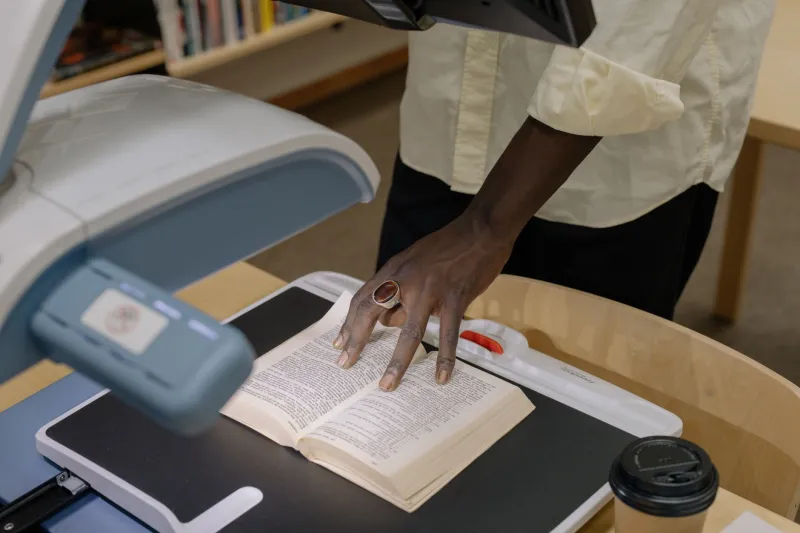
Some public libraries have begun hosting "recipe digitization days," inviting community members to bring family documents for scanning and cataloguing. The Free Library of Philadelphia ran such an event in 2022 that drew more than three hundred participants and yielded over two thousand individual recipe documents, many of which have since been incorporated into a publicly accessible digital collection organized by neighborhood and ethnic community.
For smaller communities with fewer institutional resources, social media has served as an informal archive. Facebook groups dedicated to regional cooking traditions — Appalachian recipes, Hawaiian plate lunch heritage, the foodways of the Mississippi Delta — function as living repositories where members post photographs of old recipe cards, share oral histories, and debate the correct preparation of dishes whose origins are contested or obscure.
What Is Lost When the Last Cook Goes
The urgency behind these efforts is difficult to overstate. Every year, as the generation that came of age before the standardization of commercial food culture grows older, knowledge that exists nowhere in written form edges closer to extinction. The precise spice blend a grandmother measured by feel. The way a particular family's tamale dough differed from the neighbor's. The substitutions made during lean years that became, over time, the authentic version.
Dolores Whitfield, reflecting on her years of careful documentation, acknowledged that even her most thorough efforts left gaps. "I have the cards," she said. "I have photographs of her hands while she worked. I have recordings of her voice explaining things. And I still make her biscuits wrong. I can feel it when I taste them."
That irreducible loss is perhaps the most honest argument for preservation: not that archives can recover everything, but that they can recover enough. Enough for a grandchild to understand where a dish came from. Enough for a community to recognize its own culinary identity in a searchable database. Enough for a food historian, decades from now, to reconstruct the contours of a culture that might otherwise have left no trace.
The recipes are documents. The kitchens that produced them are archives. And the Americans working to preserve them are doing something that libraries have always done — deciding that certain kinds of knowledge are too important, and too fragile, to leave to chance.