Ordinary Keepers: How Everyday Americans Are Building Archives That Outlast a Lifetime
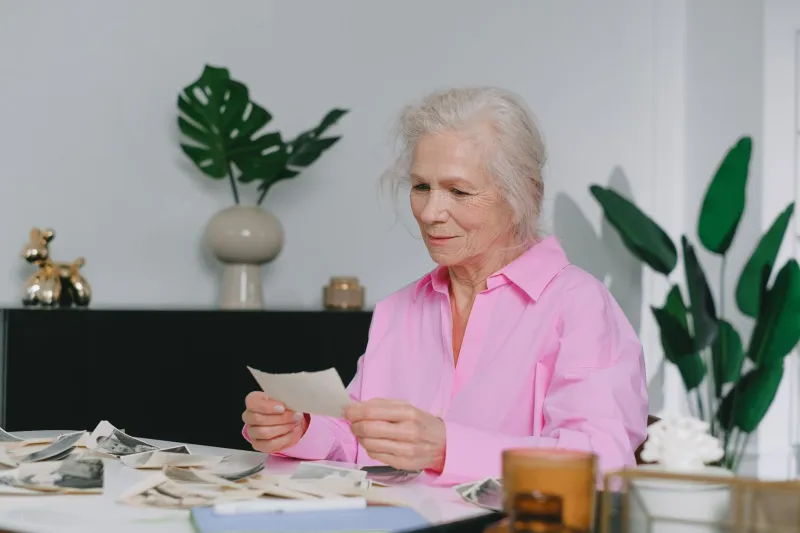
Somewhere in a suburb outside Columbus, Ohio, a retired schoolteacher named Margaret Hollis spends her Tuesday evenings at a flatbed scanner, feeding decades-old photographs through a machine one careful frame at a time. The images — her mother's wedding in 1954, a brother lost to Vietnam, a farmhouse that no longer stands — emerge on her laptop screen in vivid resolution, reborn from the fragile originals that once sat in a shoebox under her bed. Margaret is not a professional archivist. She holds no graduate degree in library science. Yet the work she is doing is, by any meaningful definition, an act of preservation that institutions spend millions attempting to replicate.
"I kept thinking, what happens to these when I'm gone?" she says. "My grandchildren don't know who half these people are. If I don't write it down, it disappears with me."
This quiet reckoning — the sudden awareness that memory is mortal — is driving a remarkable grassroots archival movement across the United States. From rural Appalachian households to urban apartments in Chicago and Los Angeles, ordinary Americans are becoming stewards of their own cultural inheritance, employing an expanding toolkit of digital technologies to capture what time threatens to erase.
The Fragility Problem
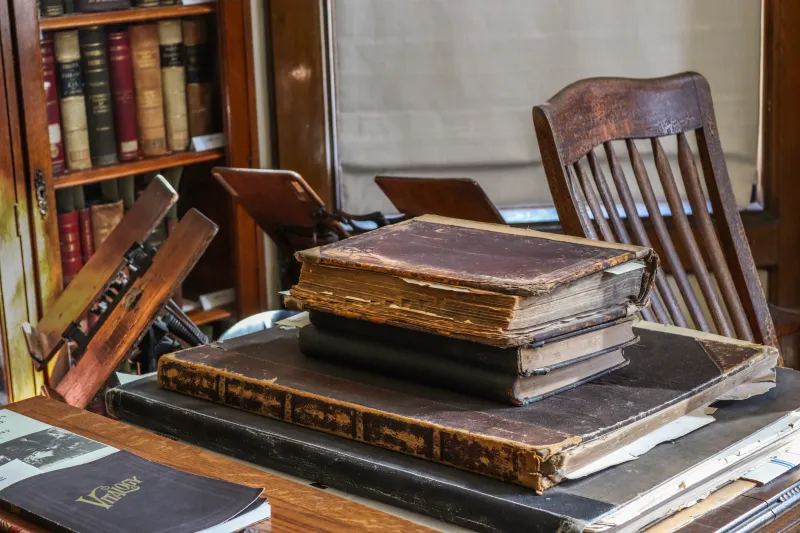
Physical records have always been vulnerable. Fire, flood, neglect, and the simple passage of years conspire against paper and celluloid alike. The National Archives estimates that a significant portion of American family history exists exclusively in private hands — in attics, storage units, and dresser drawers — never cataloged, never duplicated, never secured against loss. When those materials disappear, they do so without ceremony.
The digital age introduced a different kind of fragility. Formats become obsolete. Hard drives fail. Cloud services shut down or change their terms of service. A family's entire photographic record, uploaded to a platform in 2009, can vanish behind a forgotten password or a corporate restructuring. Archivists refer to this phenomenon as "digital decay" — the counterintuitive reality that information stored electronically can be more ephemeral than ink on cotton-rag paper.
"People assume digital means permanent," says Daniel Okafor, a community archivist who works with families in the greater Atlanta area. "It doesn't. It means flexible — which is wonderful — but flexibility requires active management. Someone has to tend the collection."
That act of tending is precisely what distinguishes a meaningful personal archive from a disorganized accumulation of files. Okafor works with families to develop what he calls a "narrative structure" for their collections — organizing materials not merely by date, but by the stories they tell and the relationships they document.
The Psychology of Preservation
Researchers who study memory and identity have long understood that personal narrative functions as more than nostalgia. The stories people tell about their families — where they came from, what they endured, how they succeeded or failed — form a psychological scaffolding that supports individual resilience and communal identity. Studies conducted at Emory University found that children who knew more about their family histories demonstrated greater emotional resilience and a stronger sense of self. The archive, in this context, is not merely a historical document. It is a psychological resource.
"There is something profound about holding a letter your great-grandmother wrote," says Dr. Sylvia Reinholt, a cultural psychologist based in Minneapolis who consults with libraries and historical societies. "It collapses time. It reminds you that you are part of something larger than your own individual life. That sense of continuity is genuinely protective — it helps people weather difficulty."
This understanding has begun to inform how libraries and community organizations approach outreach. Rather than waiting for families to donate materials after the fact, many institutions now offer workshops that help residents create archives while the people who hold the memories are still alive to explain them.
Oral History as Living Archive
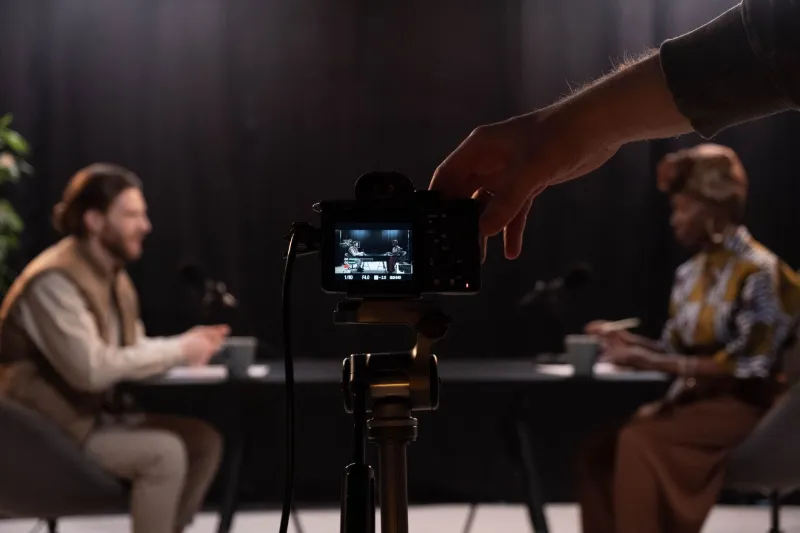
Perhaps no archival method is more powerful — or more time-sensitive — than the recorded conversation. Oral history initiatives, once the exclusive province of academic institutions and professional documentary projects, have become increasingly accessible to ordinary families. Platforms and apps now allow anyone with a smartphone to conduct and preserve a structured interview, capturing not only words but cadence, laughter, and the long pauses that precede a difficult memory.
The StoryCorps project, which has collected more than 700,000 interviews since its founding in 2003, demonstrated at scale what family historians had always intuited: that the act of asking someone to tell their story is itself a gift. Participants frequently describe the recording session as one of the most meaningful conversations they have ever shared with a parent or grandparent.
For communities whose histories have been systematically excluded from official records — Black Americans, Indigenous peoples, immigrant families — oral archives carry particular weight. They represent a form of self-documentation that does not depend on institutional gatekeepers to validate or preserve a community's experience.
"When my grandmother talks about coming north during the Great Migration, that is history," says Leona Tatum, a Chicago-based family historian who has spent five years recording interviews with elderly residents of her South Side neighborhood. "It belongs in an archive. It belongs to all of us."
Practical Steps for the First-Time Archivist
For those inspired to begin their own preservation project, archivists consistently recommend starting with what is most vulnerable. Photographs printed before the 1980s are particularly susceptible to color degradation and should be scanned at high resolution — no less than 600 DPI — before deterioration advances. Handwritten documents benefit from transcription as well as scanning, since even high-quality images can become difficult to read as handwriting styles fall out of common use.
Metadata — the descriptive information attached to a digital file — is equally important. A photograph labeled only "IMG_4872" carries no narrative weight. The same image tagged with names, dates, locations, and contextual notes becomes a genuine historical document. Many free and low-cost software tools now assist with this process, and community libraries increasingly offer workshops on digital organization for family historians.
Storage remains a critical consideration. Archivists recommend the "3-2-1" rule: maintain three copies of any important file, stored on two different types of media, with at least one copy kept off-site or in a trusted cloud service. This redundancy is not excessive caution — it is the baseline standard that professional archives apply to materials of genuine historical value.
The Archive as Community Resource
What begins as a private act of family preservation can, over time, become something larger. Genealogical societies, local historical societies, and digital archives maintained by public libraries represent natural homes for collections that have grown beyond a single household's ability to manage. Many institutions actively seek donated family collections, particularly those that document underrepresented communities or geographic regions.
The decision to share a personal archive — to move it from the private sphere into a community resource — is not always simple. It requires trust in the receiving institution and clarity about how the materials will be used. But for many families, the act of donation transforms a collection from a private keepsake into a public inheritance, available to researchers, descendants, and curious strangers for generations to come.
Margaret Hollis, back at her scanner in Columbus, has already made that decision. When her digitization project is complete, she plans to deposit copies with her county historical society and the genealogical branch of her local library. The originals will remain with her children. The stories, finally, will belong to everyone.
"I'm not doing anything special," she says, feeding another photograph into the machine. "I'm just making sure it doesn't get lost."
In the long history of preservation, that impulse — simple, stubborn, and deeply human — has always been enough to begin.