From Shoeboxes to Hard Drives: The Americans Racing to Rescue Their Family's Forgotten History
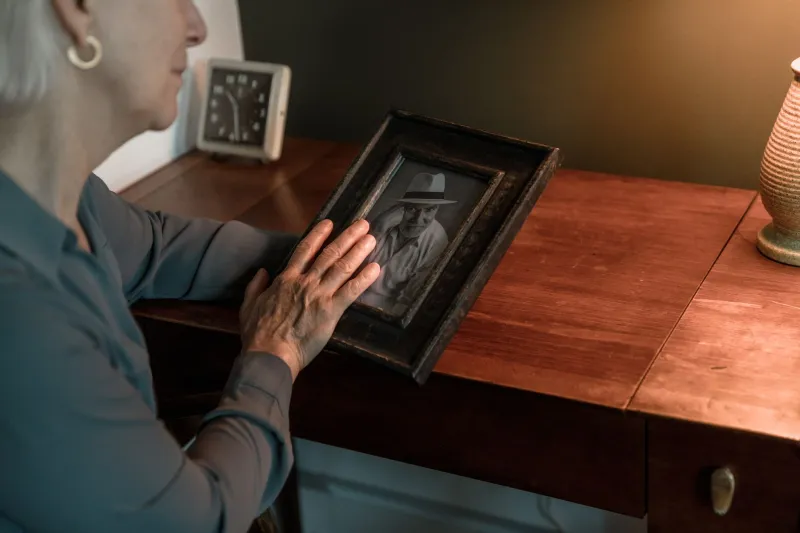
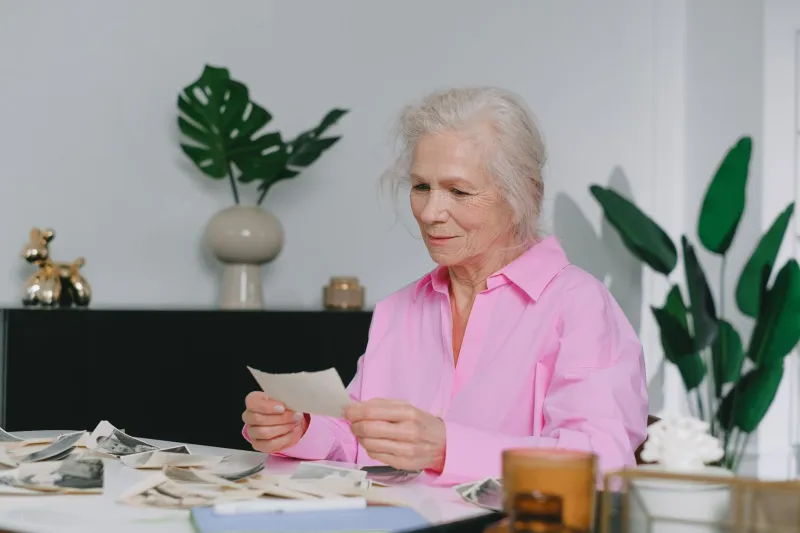
Somewhere in a suburb of Columbus, Ohio, Patricia Holbrook spent the better part of last winter hunched over a flatbed scanner in her spare bedroom, feeding decades-old photographs one by one into a machine that cost her less than ninety dollars. The images — some curling at the edges, others spotted with the amber stains of age — belonged to her late mother, who had kept them in a shoebox beneath a guest bed for thirty years. Patricia had no formal training in archival science. What she had was a growing sense of urgency and the quiet conviction that if she did not act, these images would simply cease to exist.
"I kept thinking about all the people in those photographs whose names I barely knew," she said. "Once they were gone from paper, they were gone from everything."
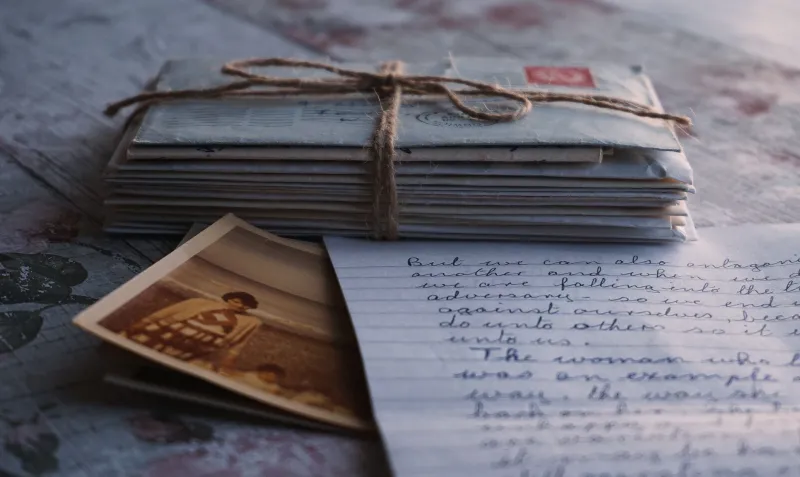
Patricia is far from alone. Across the country, a decentralized preservation movement has taken root in garages, spare rooms, and kitchen tables, as everyday Americans confront the fragility of physical memory and reach for whatever tools are available to them. They are scanning photographs, digitizing cassette tapes, transcribing handwritten letters, and uploading home movies to cloud storage — all in an effort to ensure that the documentary evidence of their families' lives survives the passage of time.
The Urgency Behind the Movement
The timing of this grassroots effort is not incidental. As the generation that lived through the mid-twentieth century continues to age, the materials they leave behind — slides, Super 8 film reels, reel-to-reel audio recordings, Polaroids — are deteriorating at a rate that outpaces casual attention. Magnetic tape, which stores the audio and video content of countless home recordings, has a functional lifespan that experts generally estimate at thirty to fifty years under typical storage conditions. Many of those tapes are already beyond that threshold.
The cultural weight of what is being lost is difficult to overstate. Family archives do not merely preserve individual sentiment; they constitute a form of community history. Wedding ceremonies, neighborhood gatherings, holiday traditions, and the quiet rhythms of daily domestic life — these are precisely the materials that institutional archives rarely collect, yet they form the connective tissue of local and regional identity.
What People Are Actually Doing
The methods employed by amateur archivists vary considerably depending on the materials at hand and the resources available. For still photographs and documents, flatbed scanners remain the workhorses of home digitization. Entry-level models from manufacturers such as Epson and Canon retail for under one hundred dollars and are capable of producing archival-quality scans at resolutions suitable for both preservation and reproduction. More committed individuals invest in dedicated film scanners capable of handling 35mm negatives and photographic slides, which require a different optical approach than standard prints.
For audio recordings, the landscape is somewhat more complex. Cassette tapes can be converted using consumer-grade tape players connected to a computer via a simple audio interface, with free software such as Audacity handling the recording and file conversion. Reel-to-reel recordings present a greater technical challenge and often require either specialized equipment or the services of a professional digitization company. Several regional businesses across the United States now offer mail-in conversion services specifically tailored to family archivists working with legacy formats.
Video presents perhaps the steepest learning curve. VHS tapes can be transferred using capture devices that connect a standard VCR to a modern computer, though the process is time-intensive and the quality of the original source material places firm limits on the result. Super 8 and 16mm film, by contrast, typically requires professional handling, as the equipment needed to project and capture the footage is both expensive and technically demanding.
The Role of Community Knowledge
One of the more striking characteristics of this movement is how thoroughly it relies on shared knowledge. Online communities — forums, social media groups, and video tutorials — have become essential resources for people navigating the technical dimensions of home digitization. Platforms such as Reddit host active communities where experienced archivists answer questions from beginners, recommend equipment, and troubleshoot problems with specific formats or software configurations.
Local libraries and historical societies have also begun to play a supporting role in some communities. A number of public library systems now offer digitization equipment available for patron use, along with occasional workshops led by staff with archival backgrounds. These programs reflect an understanding that preservation is not solely the province of institutions — that the stories held in private hands are equally worthy of care.
Denver resident Marcus Okafor discovered his local library's digitization lab almost by accident while searching for a way to convert a collection of his grandfather's Nigerian-American correspondence from the 1960s. "The letters were written in English but they referenced places, people, and events that I had never heard of," he explained. "I needed them preserved, but I also needed them readable. The library helped me do both."
Practical Considerations for Beginning Archivists
For those considering undertaking a family digitization project, a few foundational principles tend to serve as reliable guides regardless of the specific materials involved.
First, prioritize by fragility. Materials that are actively deteriorating — magnetic tape, acidic paper, cellulose-based film — should be addressed before items that are stable. A faded but intact photograph can wait longer than a cassette tape that is beginning to shed its oxide coating.
Second, scan or capture at the highest resolution your equipment and storage capacity allow. File sizes that seem excessive today become entirely manageable as storage costs continue to decline, and a low-resolution scan cannot be improved after the original has further degraded.
Third, establish a consistent file-naming and organizational system before beginning, not after. The archival value of a digital file is substantially diminished if it cannot be located, identified, or understood by someone who did not create it. Names, dates, locations, and brief contextual notes embedded in file names or accompanying metadata transform a collection of images into a navigable archive.
Finally, redundancy is not optional. A digital file that exists in only one location is nearly as vulnerable as the physical original. The archival standard known informally as the 3-2-1 rule — three copies of every file, stored on two different types of media, with one copy maintained off-site or in cloud storage — provides a reasonable baseline for personal archivists.
What Survives When We Choose to Save It
There is a philosophical dimension to this movement that its participants often articulate with surprising clarity. Patricia Holbrook, who has now scanned more than eight hundred photographs from her mother's collection and shared the resulting archive with cousins she had not spoken to in years, puts it simply: "These things don't survive by accident. Someone has to decide they matter."
That decision — deliberate, often laborious, always personal — is what distinguishes a preserved record from a discarded one. The digital archive that results from weeks of careful scanning and cataloguing is not merely a backup. It is an act of interpretation, a statement about which stories deserve to endure and why.
At Stihl Library, we believe that the preservation of personal and community history is inseparable from the broader project of cultural understanding. The materials held in American homes — imperfect, intimate, and irreplaceable — constitute a form of literature as surely as any published text. The Americans who are choosing to digitize them are, in their own way, building libraries. The fact that those libraries live on hard drives and in cloud servers rather than on shelves does not diminish their significance. If anything, it extends their reach to exactly the communities that need them most.