Whose History Gets Saved: The Unequal Race to Digitize America's Disappearing Stories
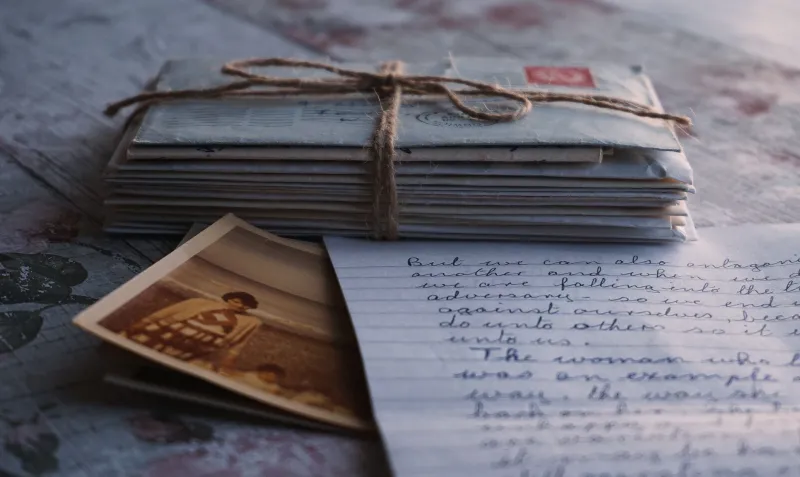
In a small church basement in the Mississippi Delta, a congregation's entire recorded history—handwritten baptismal records, faded photographs, decades of meeting minutes—sits in cardboard boxes slowly surrendering to humidity. A few hundred miles away, a major research university operates a climate-controlled digitization lab equipped with high-resolution scanners and a staff of trained archivists. Both locations hold irreplaceable American stories. Only one of them has a realistic chance of preserving those stories for future generations.
This is the digitization divide—a structural inequality that determines not merely which communities have access to historical archives, but which communities get to exist within the historical record at all.
The Infrastructure of Memory
Preserving historical materials in the digital age requires more than goodwill. It demands reliable high-speed internet, professional-grade scanning equipment, archival software, cloud storage, and personnel trained in metadata standards and digital preservation protocols. Each of these components carries a price tag, and together they represent a threshold that many American communities simply cannot meet.
According to research from the Institute of Museum and Library Services, public libraries serving rural and low-income populations consistently report lower technology budgets, reduced staffing, and limited access to the grant-writing expertise needed to compete for federal preservation funding. The result is a compounding disadvantage: communities with the fewest resources are simultaneously the least equipped to document themselves and the least visible to the institutions that might help them do so.
For tribal nations, historically Black communities, immigrant enclaves, and low-income rural towns, this invisibility carries a particular weight. These are often the very communities whose histories have been systematically excluded from mainstream archives. The digital era offered a genuine opportunity to correct that omission. Instead, it has in many cases reproduced the same inequalities in a new format.
Funding Gaps and the Grant Economy
Federal programs such as the National Endowment for the Humanities' Preservation Assistance Grants and the Library of Congress's American Folklife Center do provide funding specifically aimed at underserved communities. State humanities councils distribute additional resources. Yet advocates and community archivists consistently describe a grant landscape that favors organizations with existing infrastructure—those that already employ someone who understands how to navigate complex application processes, meet reporting requirements, and demonstrate institutional credibility to review committees.
"The communities that most need this funding are often the least positioned to ask for it in the language that funders want to hear," explains one community archivist working in Appalachian Kentucky, who has spent years helping small historical societies prepare competitive grant applications. "You need to know the right terminology, you need 501(c)(3) status, you need a track record—and if you're starting from scratch with no budget, that track record doesn't exist yet."
This catch-22 leaves many grassroots preservation efforts dependent on volunteer labor and donated equipment, conditions that make long-term sustainability nearly impossible. Volunteers age out. Donated scanners break down. Hard drives fail. Without institutional backing, even successful digitization projects can collapse before their collections are properly secured.
What Is Lost When Stories Go Unpreserved
The consequences of this divide extend well beyond archival completeness. When a community's history is not preserved, its members lose the ability to trace their own lineage, to document their contributions to the broader American story, and to provide future generations with a foundation of cultural identity. Legal implications arise as well: for Native American tribes, documented oral histories and land records can be essential to sovereignty claims and treaty rights. For other communities, local historical records support everything from property disputes to applications for historic district designation.
The loss is also collective. American history as a discipline becomes distorted when only certain voices are preserved with fidelity and care. The archives of tomorrow will reflect the funding priorities of today, and those priorities, left unexamined, tend to favor the already powerful.
Grassroots Organizations Pushing Back
Despite these obstacles, a number of organizations are working creatively to redistribute the tools of preservation. The Documenting the Now project, which grew from efforts to archive social media records of the Ferguson, Missouri protests, has developed open-source software specifically designed for communities that cannot afford commercial archival platforms. The project centers community consent and ownership, challenging the assumption that preservation must be managed by external institutions.
In New Orleans, the Porch Cultural Organization has worked with neighborhood residents to digitize personal photographs and oral histories from communities still recovering from Hurricane Katrina, building a locally controlled archive that exists outside university or municipal systems. Similar efforts are underway in Detroit, on the Pine Ridge Reservation in South Dakota, and in immigrant communities across Texas and California.
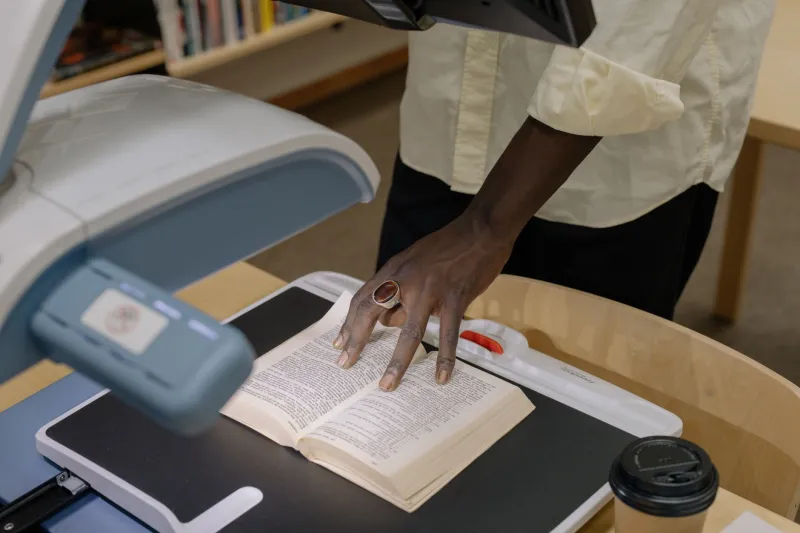
Public libraries, too, are adapting. A growing number of library systems now offer digitization services directly to patrons, allowing residents to bring in family photographs, letters, and documents for scanning at no charge. The Denver Public Library, the Multnomah County Library in Oregon, and the Brooklyn Public Library are among those that have expanded such programs in recent years, recognizing that community members are often the most motivated—and the most knowledgeable—archivists of their own histories.
Bridging the Divide: What Would It Take?
Archivists, librarians, and community advocates who spoke with Stihl Library identified several concrete measures that could meaningfully reduce the preservation gap. Sustained federal investment in rural and tribal library infrastructure remains the most frequently cited need—not one-time grants, but recurring funding that allows communities to build expertise over time. Simplified application processes for small organizations, mentorship programs pairing under-resourced community groups with experienced archivists, and mobile digitization units that can travel to remote areas are all proposals that have demonstrated success in pilot programs.
Technology companies have a role to play as well. Donated equipment, discounted cloud storage for nonprofit archives, and pro-bono technical assistance can extend the reach of preservation efforts considerably. Several major technology firms have made commitments in this area, though advocates note that corporate philanthropy, while valuable, cannot substitute for stable public investment.
Perhaps most importantly, the communities at the center of this conversation must be positioned as decision-makers, not merely recipients of outside assistance. Preservation is most durable when it is driven by the people whose stories are at stake—when they determine what is collected, how it is described, who has access, and how it is shared.
The Archive as a Democratic Institution
At its core, the digitization divide is a question about the nature of democratic memory. A society's archives are not neutral repositories; they are arguments about what matters, whose experiences are worth recording, and which voices deserve to be heard across generations. When the tools of preservation are distributed unequally, those arguments are settled by default, in favor of the communities that already possess resources and institutional recognition.
The work of closing that gap is neither simple nor inexpensive. But it is, in the truest sense, the work of building a more complete and honest account of American life—one in which a congregation's baptismal records in a Delta church basement carry the same claim to permanence as the papers of a university president. The stories are equally real. The question is whether the infrastructure of memory will ever treat them that way.