Ink and Memory: The Americans Who Refuse to Let Handwritten Letters Disappear
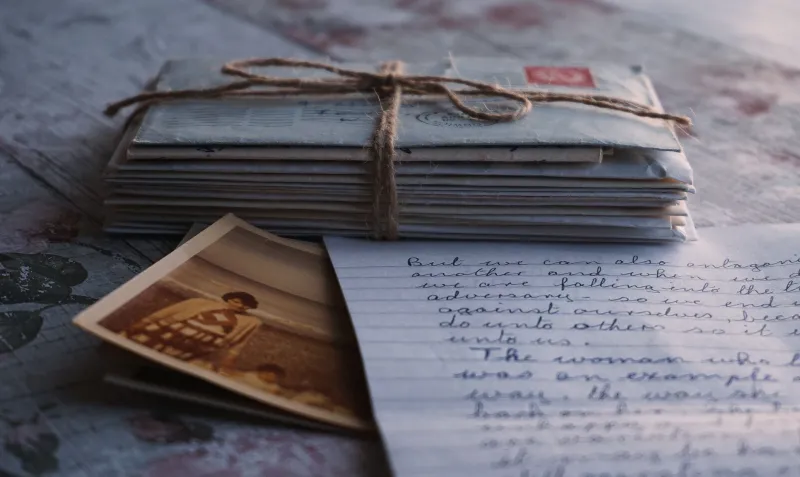
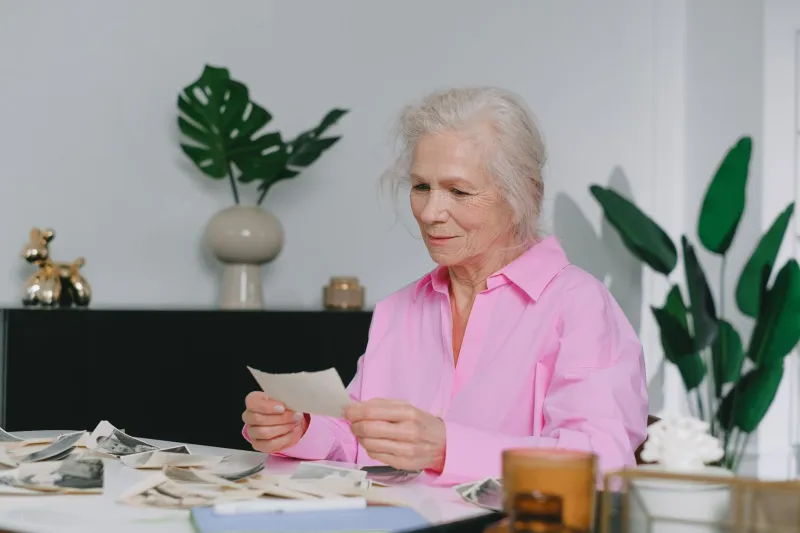
In a storage unit outside Columbus, Ohio, Margaret Holloway made a decision that would consume the next three years of her life. Sorting through her late mother's belongings, she discovered four shoeboxes filled with handwritten letters — correspondence stretching from the 1940s through the early 1990s, penned by relatives, neighbors, former suitors, and wartime friends whose names had long since faded from family conversation. The temptation to set them aside for the donation pile was real. Instead, she carried them home and began scanning them, one by one, on a flatbed scanner she ordered from an electronics retailer the following morning.
"I realized I was holding something that no one would ever write again," Holloway said. "Not because people aren't capable of it, but because the world that produced those letters is simply gone."
Holloway is not alone. Across the country, a growing number of Americans — archivists and amateurs alike — are turning their attention to the fragile, fading record of pre-digital personal communication. Handwritten letters, pocket diaries, postcards, grocery lists, and marginalia-filled books are being rescued from dumpsters, estate sales, and forgotten closets with a sense of purpose that speaks to something deeper than nostalgia.
What Is Being Lost — and Why It Matters
The scale of what disappears each year is difficult to overstate. Estate liquidators routinely report that personal papers are among the first items discarded when a household is cleared. Unlike furniture or jewelry, handwritten documents occupy an awkward middle ground: too personal to sell easily, too voluminous to store, and too unfamiliar to younger heirs who may not recognize their significance.
Yet what these papers contain is irreplaceable. A letter written by a factory worker in Detroit during the 1967 riots, a postcard sent home by a nurse stationed in Korea, a teenage girl's diary kept during the Dust Bowl migration — these documents carry the texture of lived experience in a way that official records seldom achieve. They capture vernacular language, regional idiom, the rhythms of ordinary thought. They preserve uncertainty, grief, humor, and affection in their rawest forms.
Historians and literary scholars have long understood this. Personal correspondence formed the backbone of biographies, social histories, and cultural studies throughout the twentieth century. What has changed is the recognition that this resource is not exclusive to the famous or the powerful. The letters of unremarkable people — farmers, seamstresses, shopkeepers, soldiers who never made the history books — constitute an archive of American experience that is, in aggregate, as valuable as any presidential library.
The Tools Driving the Movement
What makes the current preservation effort distinctive is its accessibility. The equipment required to digitize personal correspondence has become both affordable and user-friendly in ways that would have seemed remarkable even fifteen years ago.
Flatbed scanners capable of producing archival-quality images now retail for well under two hundred dollars. Smartphone applications such as Adobe Scan and Microsoft Lens allow users to photograph documents and automatically correct distortion and lighting, producing clean digital files within seconds. Cloud storage services provide virtually unlimited space for the resulting files, and platforms like Google Drive and Dropbox make sharing with family members or researchers straightforward.
For those seeking more rigorous standards, organizations such as the Library of Congress and the Smithsonian Institution have published freely available guides to best practices in personal archiving. These resources cover everything from appropriate file formats — TIFF files are generally preferred over JPEG for long-term preservation — to the proper handling of fragile paper and the importance of capturing metadata alongside the documents themselves.
Community libraries have also stepped into the gap. Institutions in cities including Portland, Nashville, and Philadelphia have begun offering digitization workshops and loaner equipment programs, positioning themselves not merely as repositories for published works but as active participants in the preservation of local memory.
The Intimate Record No Algorithm Can Replicate
There is a quality to handwritten correspondence that digital communication has not managed to reproduce, and perhaps never will. The pressure of a pen on paper, the particular slant of an individual's cursive, the choice of stationery, the postmarks and stamps, the occasional pressed flower or torn newspaper clipping tucked inside an envelope — each of these elements carries information that transcends the words themselves.
Linguists and historians note that handwritten letters also tend to be composed differently than emails or text messages. The effort required to write by hand, and the relative permanence of the medium, encouraged a kind of deliberateness that is largely absent from contemporary digital communication. Writers chose their words with greater care. They organized their thoughts. They revised. The result is often a more considered and more revealing document than anything produced by tapping on a glass screen.
This is not mere sentimentality. Researchers studying American social history have found that personal correspondence offers evidence of attitudes, relationships, and experiences that simply do not appear in any other source. Letters exchanged between siblings during the Great Migration, for instance, document not only the facts of that movement but the emotional reality of separation, aspiration, and reinvention — material that no census record or newspaper account could provide.
Building Archives That Belong to Everyone
One of the most significant developments within the preservation movement is the growing emphasis on accessibility. Early digitization efforts often resulted in private family archives — carefully organized, but effectively sealed from any broader use. Increasingly, individuals and community organizations are exploring ways to make their collections available to researchers, educators, and the general public.
Platforms such as FamilySearch, the Internet Archive, and various state historical society databases have begun accepting donations of digitized personal papers, providing infrastructure for collections that might otherwise remain invisible. Some contributors choose to restrict access to certain documents for a defined period, protecting living individuals while ensuring that the materials eventually enter the public record.
Libraries and historical societies across the country are actively encouraging this kind of contribution. Many have developed intake processes specifically designed for digitized personal collections, with staff available to assist donors in organizing and describing their materials in ways that make them discoverable by future researchers.
The Work Ahead
For all the progress that has been made, the challenge remains enormous. The window for preserving twentieth-century personal correspondence is narrowing. Paper deteriorates. Ink fades. The individuals who can provide context for what is written grow fewer each year. Every letter that enters a recycling bin without being scanned represents a permanent subtraction from the collective record.
Yet the movement continues to grow, driven by people like Margaret Holloway, who finished digitizing her mother's letters on a Sunday afternoon in late autumn and immediately began writing descriptions for each one, noting dates, names, and the events they referenced.
"Someone will want to know this someday," she said. "Maybe not today, maybe not for fifty years. But these were real people living real lives, and they deserve to be remembered."
That conviction — that ordinary lives are worth preserving, that the handwritten word carries a weight worth honoring — is precisely what drives the broader mission of institutions and individuals committed to keeping the past legible for the future. The letters are waiting. The scanners are ready. The only question is whether enough people will act before the ink fades entirely.